
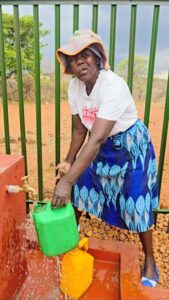
In Jori Village, Ward 13, Gomba Cluster Gutu, Modester Masuka, cares for her sister recovering from a stroke, and their 89-year-old bedridden mother. Managing household tasks that required water was a daily struggle. Their nearest borehole was difficult to operate, often requiring her to mobilise two other people just to draw water. At times, she was forced to walk even longer distances to fetch a few buckets, an exhausting task for anyone, let alone someone caring for a stroke patient and an elderly parent.
With limited water, basic hygiene suffered. Laundry was especially difficult. Her mother’s soiled clothes and blankets often had to be hung by the fence to dry. On a good day they would be hanged lightly rinsed, because washing them thoroughly required more water than the household could manage. The burden was heavy, and the situation was taking a toll on her health as she was developing chest pains she believes were being caused by the challenging process of drawing water from the worn-out borehole equipment.
Everything changed when a water point was installed just 30 metres from their homestead through the Jori Piped Water Scheme. Modester’s household finally has reliable, close access to clean water. She can now fetch water easily, wash her mother’s bedding and clothing as often as needed, and maintain hygiene standards that once felt impossible. The simple act of having water nearby has restored a sense of control, dignity, and relief to her daily life. Even Getrude, who is recovering from a stroke, is now able to fetch water herself because the tap is so close, allowing her to comfortably carry 5-litre containers.
…as Tsungai paves way for health gains…
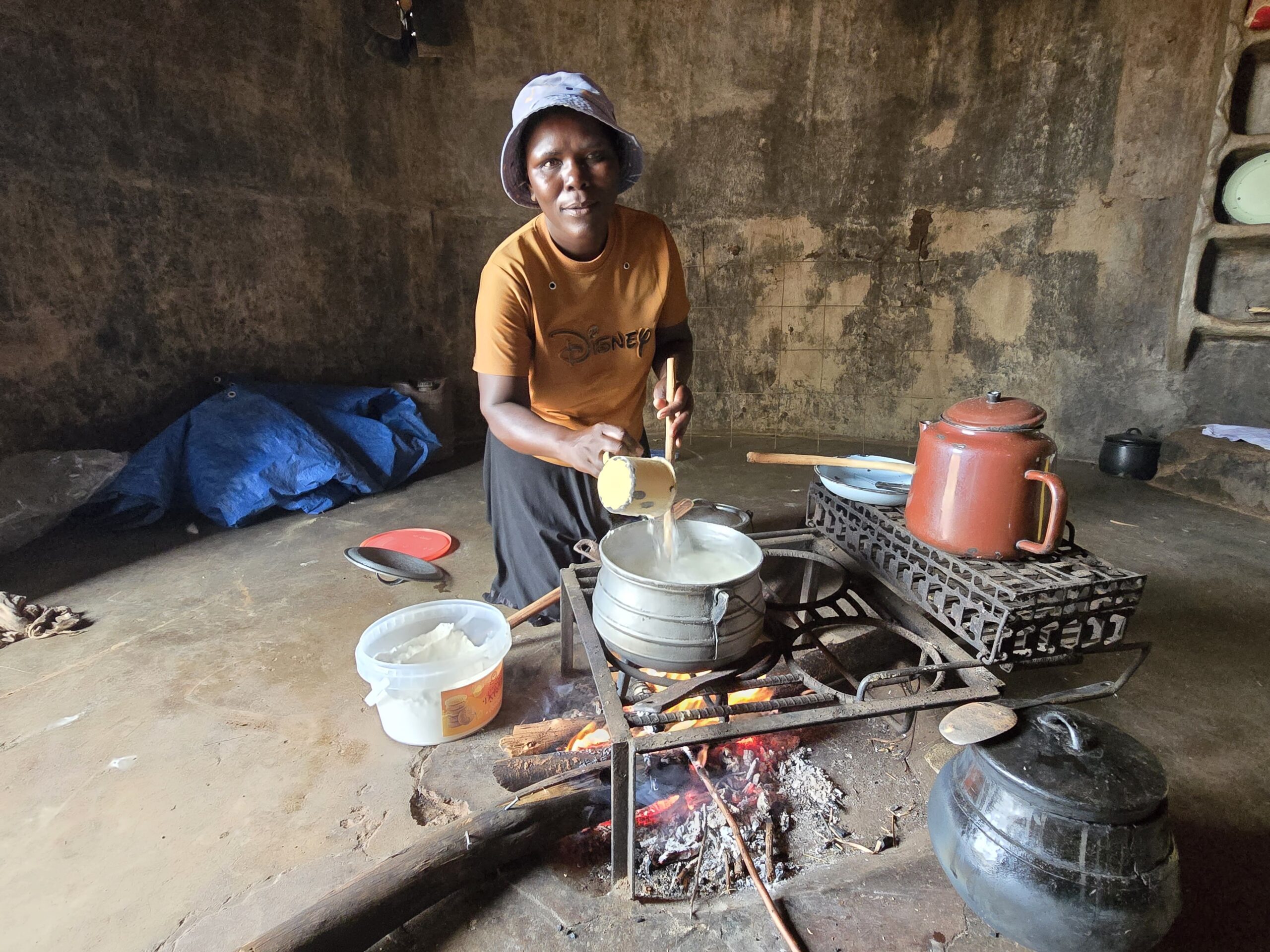 The timing of the Tsungai seed distribution last season became a lifeline for Modester’s household. The support contributed to a good harvest of pearl millet, groundnuts, and finger millet crops that are sustaining them with stable meals throughout the day, porridge in the morning, a proper lunch, and a filling supper. For Modester’s sister, Getrude, who must take medication three times a day and always after eating, the availability of consistent meals has been crucial for her recovery. With food now readily available, she is taking her medicines at the prescribed times, no longer restricted by food shortages, and she is already noticing real improvements in her health.
In previous drought seasons, the household often managed only two meals a day, or sometimes just one meal or none. On difficult days, Getrude would skip her medication altogether because she had nothing to eat, a situation that slowed her recovery and placed her health at risk.
Modester reflects with gratitude on the effect of the Tsungai Project, a United States Government–funded initiative operating in 10 wards of Gutu District, Masvingo Province benefitting over drought prone 4000 households. For Modester, the integration of Water, Sanitation and Hygiene (WASH) and food security support has been nothing short of transformational. Clean, accessible water allowed her to care for her household with dignity, while the improved food supply strengthened their health and supported recovery for her sister.” She is thankful that the project’s WASH and emergency food security interventions, came at a time when her family needed them most.
No comment